Welcome

Welcome to this blog

10 December 2009

The Long Gray Line


*****
Rick Atkinson
Such and interesting book and story. This has to be one of the best peeks into the US Army ever, all the way from West Point '66 to Grenada. By following a number of key individuals all the way from '66 to '87 or so Atkinson was able to put together a story as wide and sweeping as the era, doing justice to the men, the times, and the Army as institution. The stories are so human and gripping, the characters truly diverse and human, that you come away very moved by what the Vietnam war did to that class of boys, to the army, and to the nation.

Alexis de Tocqueville: A Life


****
It's been about a month since I finished this, so it's a little hazy now. Hugh Brogan has done a good job of presenting a complete life, which I'm sure is very valuable for the academics who read the book. It was for me a little tedious at times, the major part of the text being of more interest to scholars of French history and politics than political philosophy and American history/culture. That being said, his coverage of Tocqueville and Beaumont's travels in America were very complete and well done. For the first time I felt I had a good sense of where they did and did not go and for how long. Other than that Brogan tries to take on Tocqueville to no real avail. But the life he presents seems honest and true and is very useful for understanding more about the man and how his experience and station may have influenced his thought.

28 February 2009

The Best American Science and Nature Writing

***1/2
Jerome Groopman, M.D., Editor

This is a good read with an interesting selection of articles. Notable articles included topics like the role of dark matter in the universe's expansion (The Universe's Invisible Hand), the growing use of robots in warfare (The Coming Robot Army), new archaeological evidence of the early Christian church (First Churches of the Jesus Cult), the brain and music (Bolt from the Blue), and the role of retro-viruses in the human genome (Darwin's Surprise). The later was particularly interesting because
these viruses embed themselves in the genome in ways that can lead to -- technically -- a new species. Hmmm, maybe we are all Cylons!


09 February 2009

Fooled by Randomness


Nassim Nicholas Taleb
***1/2
291 pages

Coming from a Lebanese immigrant background, Taleb learned early on to distrust the "normal" and be on the look-out for the "black swan", the event that can come by out of the blue to blow you and yours out of the water. He also likes money and free time, so he ended up as an investment banker who learned to balance his bets to yield a good return while at the same time protecting him and his invetors from black swans, which are actually creatures of randomness. So this book helps explain how we are fooled by randomness. (Essentially, we are wired in such a way to take risks according to Taleb.) It was a good read in spite of the hectoring tone. I think he had a particular audience in mind who think they know -- when they don't really.

Snow Crash

Neal Stephenson
****
470 pages

This was a great read: combining great action description, clever cartoonish exageration, and biting satire. Add in a slightly dystopian depiction of a networked future that is sometime uncannily acurate, and you have a significant read as well. This -- like all good sci-fi -- said as much about the present as the future.

07 February 2009

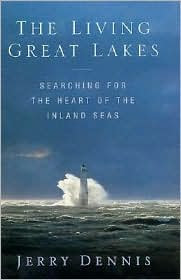
The Living Great Lakes


****
Jerry Dennis
It was a real treat to read this last summer while in Michigan. The combination of human and natural history this author brought to light was genuinely fascinating. Having read Tocqueville in America a few months before, I had a cross referencing experience when reading about the white pine forests of Michigan in this book. The two accounts matched nicely. Also, the use of a voyage to tie the facts together in a memorable whole worked quite well. He followed the lakes all the way past Niagra and down the Erie canal to the Hudson and beyond. That was interesting too.

The Body Has a Mind of Its Own


****
Sandra and Matthew Blakeslee

It was interesting in this read to realize the role of body mapping for placing our sense of self solidly in the world. And it was particularly interesting to note the relationship body mapping has to "paranormal" experience, i.e. "out of body" experiences, "phantom pain" in amputees, the experience of extra limbs, or the brain's ability to develop new maps in virtual reality experiments, in which an experimenter learned to move claws and tail un-self-consciously.

Slan: A Novel


***
A. E. Van Vogt
Imagine science fiction with no computers. With no DNA. Could it be any good? Slan is. Essentially its a story of natural selection as opposed to genetic engineering. It has rocket ships. but with mechanical controls. But essentially its a story about prejudice, and prejudice is universal. It's a quick read and worth taking on.

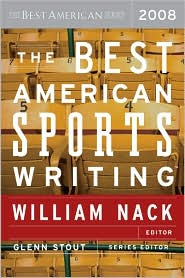
The Best American Sports Writing 2008


****
Glen Stout , ed.
This is a great collection of well written, interesting stories. It's not a book to keep, but it's worth buying and passing on.

09 July 2008

Once Upon a Time in the North


Philip Pullman
*** 104 Pages

This slight book is a form of "prequel" to the His Dark Materials trilogy, which recounts how the balloonist Lee Scoresby and Iorik the bear first met. In a nutshell, Scoresby comes upon an island in the far north on a balloon trip from Texas. He lands in the middle of a mayorial contest pitting a candidate fronting a rapacious oil company which is corrupting local politics. Somehow this politician has hired a notorious gun slinger from Texas as his thug. Scoresby has run into him before. Eventually they have a major gun fight with Scoresby's rabbit daimon taking on the rattlesnake daimon of the outlaw. Meanwhile Iorik has been performing mighty deeds helping to knock out a mechanical cannon, break down steel doors, and gather a healing moss to dress Scoresby's wounds. They escape by balloon supplied by the Customs agent who has a soft spot for Scoresby since the latter talked the agent's fiance into accepting his mariage proposal. A bit of an outlandish tale and fun if you have already read the Golden Compass, otherwise it wouldn't be very compelling.

A Whole New Mind: Why Right-Brainers Will Rule the Future


Daniel H. Pink
** 247 Pages

Well, first of all, the title doesn't fit the message: his claim is that a BALANCED brain will be needed, left AND right brain, not just one or the other. This book could have been half to two thirds the length, but I will grant that he at least footnoted his text. In a nutshell, six "BIG" ideas will CHANGE THE WORLD: design, story, symphony (really means synthesis), empathy, play, and meaning. The main value of the book is in the "practical exercises" at the end of each chapter. Some of theses sections have some interesting links to web sites. Don't get me wrong, don't go out and buy the book for the practical sections, they just have some value. I would not recommend buying this book.

04 July 2008

Tocqueville in America


George Wilson Pierson
***** 777 pages
I stumbled upon this book at 3rd Place Books and bought it without hesitation. I had always wanted to read it since taking an NEH Seminar on Tocqueville at Kenyon College in 1988. The book is everything it was cracked-up to be: thorough, balanced, well written, and full of information about not only Tocqueville and the origins of his ideas, but also the United States in 1831. Traveling with his friend, Gustave Beaumont, Tocqueville traversed a broad swath of US geography and society, journeying to three of the four corners of the country, New York, Michigan territory, and New Orleans. Travel in the 1830s was rigorous and not without its dangers. Two of the steamboats they traveled on sank, they had to walk twenty miles through knee deep snow in Kentucky, and slept out in the deep woods of Michigan.

One of the best aspects of Tocqueville in America is the extensive and informative footnotes that Pierson employed. He identifies almost every person they talked to, explaining their role in society, accomplishments, and significance for Tocqueville's thought. Essentially, he combed Tocqueville and Beaumont's journals and letters, the newspapers of the day, and litterally follows their progress day by day on their explorations. One of the best reads I've had all year.

Real Life at the White House


John and Claire Whitcomb
**** 446 pages
Brimming with anecdote, Real Life at the White House conveys a sense of the Presidents' personality and character in a way that political histories can't. Since each chapter is about an individual president, the reader can pick the book up and put it down with long pauses between sessions and not lose the thread of a story. As one would expect, there tends to be more information about the modern presidents, though some of the earlier presidents' stays are surprisingly well documented. Real Life is well documented and footnoted as any good history should be. The style is engaging and light without being "fluffy." A good read for those with an interest in biography.

08 June 2008

Moodle Teaching Techniques: Creative Ways to Use Moodle for Constructing Online Learning Solutions


William H. Rice, IV
*****
Often books on software do a "feature parade" laying out literally hundreds of features found in a program like Photoshop, yet the real utility of the software comes from knowing how the features can be used together to create certain effects. Those books are rare and very valuable. Moodle Teaching Techniques describes how to use Moodle to achieve a number of educational purposes, explaining how the features available can be used within over-arching learning concepts. Very useful and a book we want to get to the faculty who get trained this summer.

Moodle: E-Learning Course Development


Willian H. Rice, IV
****
I've had this book for just over a year and never read it through until now. Since I'm changing jobs and becoming a tech trainer and curriculum integrator I needed to read this through to widen my understanding of how to get things done using Moodle. To put it simply this is the best book of its type -- so far. It's clearly written and thorough. We used it last summer for prepping a faculty training and will use it again this year.

The Hunt for Zero Point: Inside the Classified World of Antigravity Technology


Nick Cook
****
Looking more than a little like a 1950's sci-fi book, the cover to The Hunt for Zero Point does it no favors for its credibility. Nor does the "new journalism" style, with its lurid descriptions of sites, author feelings, meetings, and the mysterious "Marcus" -- an academic of some sort who is never really identified, but who directs Cook's quest through indirection. Nor does the lack of footnotes. However, the bibliography helps somewhat, as does the existence of Nick Cook as a real person who works at "Jane's Weekly," not to mention that he still works there after the publication of this book.

What to make of it then? The student who lent it to me thought something was going on, though who knows what? A quick search with Google turns up a surprising amount of research going on in the field of anti-gravity -- even Boeing right here in Seattle. Some of the stories seem just a little too far fetched. Cook recognizes that information and disinformation are mixed into a very difficult cocktail to take without some hesitation. It helps his credibility that he doesn't swallow it all, but it does put him into a bind -- are his informants helping keep the spin going? Is his book doing the same. The work he did linking Nazi war criminals with US technology developments is credible but by his own admission unproven. Pretty good book actually.

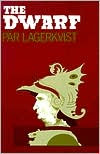
The Dwarf


Par Lagerkvist, translated by Alexandra Dick
****
The dwarf is the embodiment of human aggression. This is not hard to fathom: he cuts off the heads of little kittens, despises the weak and innocent, is proud to have strangled another dwarf, Jehoshaphat, making him the last dwarf at the court, and eventually poisons the Prince's best friend. Written in the form of diary entries, the story is entirely from the dwarf's point of view. He is thoroughly an unreliable and limited narrator: he can't understand the Princess Angelica's love for the son of the Prince's bitterest enemy, her mothers love for the Prince's best friend (not to mention why the Prince "puts up with" such a thorough rake), nor the court's Renaissance man's interest in learning and art for their intrinsic interest. He values war, revenge, and power intrinsically.

This would seem almost flat-footed (and sometimes is) except that the limited perspective forces the reader to consider how aggression affects relationships, identity, values, and meaning. Most of the time the dwarf embodies the Prince's aggression, but there are times when he acts upon the Queen and Angelica -- encouraging the Queen's self loathing and abasement upon the murder of her lover, and Angelica's suicide upon the murder of her lover. As the embodiment of the Prince's aggression, he is almost completely destructive to his best interests, destroying his friendships, love relationships to his wife and daughter, and his country. Eventually he is sent to the dungeon (repressed) where, in the last sentence of the book, he reflects "on the day when they will come and loosen my chains, because [the Prince] has sent for me again." So the dwarf will live on and be active again.

So what positive bit can we take away from this book? Maybe to be alert and aware to how our own aggression affects us? That some other course between total repression and total inhibition has to be found, what ever that might be? It seems to me it was no accident that The Dwarf was written during World War II.

11 May 2008

Himalayan Quest: Ed Viesturs on the 8,000-Meter Giants


Ed Viesturs
**** 1/2
This is really a picture book with a few introductory pages and extended captions. I saw it at 3rd Place Books for not much money and picked it up along with True Summit. Having read Viesturs's No Short-cut to the Top just a a few days ago, I couldn't resist. The pictures fill out his text nicely and many of them are very good. Every caption is matter of fact. The pictures -- with rare occasions -- are undramatic in terms of human struggle. Viesturs is afflicted with being so good, he rarely gets into trouble. The most dramatic scenes in his accounts involve saving other climbers or coming upon their bodies. I like this book even if it isn't dramatic. I like pictures of high places.

True Summit: What Really Happened on the Legendary Ascent of Annapurna


David Roberts
*****
Annapurna by Maurice Herzog has had more impact on modern climbing than any other book -- by any measure. It is still in print after 57 years and has sold more than 11 million copies. I've had a copy for about 30 years, a little paper back that sits meekly on the shelf surrounded by more imposing volumes. It is truly one of the most gripping climbing books ever and read like a novel. Roberts himself was deeply influenced by Herzog's book and it must have been with a little pain that he de-constructed the story and filled it out with the accounts of Louis Lachenal (who summitted with Herzog) and Gaston Rebuffet (who did not, but played an important role in finding the route up the mountain).

In short, Herzog, suppressed other versions than his of the climb for almost 50 years. Starting from before the climbers left France, to even 1998. The climbers who went with Herzog had to literally swear solemnly that they would follow his orders and not publish anything about the climb for at least five years after they got back. Five years later Lachenal was just about to publish his version when he was killed in a climbing accident. After his funeral, Herzog was given the responsibility of preparing the manuscript for publication, handing over editing duties to his brother and the head of the French climbing institution that sponsored the Annapurna climb and assigned Herzog as leader. Both men expurgated any negative comments about Herzog -- of which there were more than a few, as well as mention of any "negative" that may have occurred on the climb.

I won't go into all the details, but here is the best example of Herzog's modus operendi, and the Chamonix guides's response to one instance of his show boating. When they reached the summit, Lachenal wanted to return quickly since he felt his feet freezing (He lost all his toes by the end of the climb). Herzog, however, wanted to take pictures of three pennants on the summit: the French tricolor, the French alpine club's flag, and finally the flag of the tire company for which he worked! This offended Lachenal who gave the roll of film containing the flag shot to Rebuffet. Rebuffet developed the film and returned all the images to the official expedition photographer -- except for the picture of the tire company's pennant. Herzog knew that Rebuffet had the roll and even had the expedition photographer search him before boarding a plane to France after the expedition. Because of Herzog's political connections and power within French alpinism, Rebuffet never again climbed in the Himalayas. So what was depicted in Herzog's account as a noble, transcendent expedition was really just another climb.
Roberts did an excellent job of staying true to the real accomplishment of the Annapurna climbers while unraveling the suppressed events. As usual he captures the real feel of an expedition as good as any other writer, even Herzog.

05 May 2008

No Shortcuts to the Top: Climbing the World's 14 Highest Peaks


Ed Viesturs
*** 1/2
David Roberts did a very good job of preserving Ed Viesturs's voice in helping with this book. Roberts is one of the finest climbing/adventure writers of his generation, which is saying quite a bit given the fine writing that has come out in the last 40 years. Ed Viesturs is clearly one of the finest climbers of the last 40 years as well. Together, though, the book doesn't quite live up to the best of climbing writing. One of the great paradoxes of modern, professional climbing is that the climber has to get sponsorship in order to cover the costs of climbing the high peaks of the Himalayas. To do that they have to tell the world what they did either alone or with very small company. In short they have to brag without doing so in an unseemly manner.

Viesturs has had to hustle for upwards of thirty years now to sell his story and gain sponsors. This is a fact of life, and given Viesturs's gifts as a climber -- and his ambitions, I don't begrudge him having to do so. It just doesn't make for as interesting a story. Too much of the book is about the need to gain sponsors, give slide shows, and sell equipment. It's just the way it is. The truly high peaks demand too many resources and always have. Now, however, small teams approach these mountains alpine style, and individuals buy into "expeditions" instead of being recruited by clubs and national sport institutions. So the money comes from different sources, the politics change, and the stories have somehow become less compelling, unless, of course, there is disaster.

Poor Ed. He was good a climber. He' never lost any fingers or toes, had no bivouacs above 28 thousand feet, and usually climbed as planned. He felt in control
almost always on a mountain. Not as much drama in the telling when the voice is matter of fact. Was he as in as much control as he felt? I don't think so, but he probably was in control more than just about any other climber. His account of his three attempts to climb Annapurna are the best parts of the book because he was frightened by its routes. Ultimately overcoming fear is much more interesting than climbing high in itself.