Welcome

Welcome to this blog

08 June 2008

The Hunt for Zero Point: Inside the Classified World of Antigravity Technology


Nick Cook
****
Looking more than a little like a 1950's sci-fi book, the cover to The Hunt for Zero Point does it no favors for its credibility. Nor does the "new journalism" style, with its lurid descriptions of sites, author feelings, meetings, and the mysterious "Marcus" -- an academic of some sort who is never really identified, but who directs Cook's quest through indirection. Nor does the lack of footnotes. However, the bibliography helps somewhat, as does the existence of Nick Cook as a real person who works at "Jane's Weekly," not to mention that he still works there after the publication of this book.

What to make of it then? The student who lent it to me thought something was going on, though who knows what? A quick search with Google turns up a surprising amount of research going on in the field of anti-gravity -- even Boeing right here in Seattle. Some of the stories seem just a little too far fetched. Cook recognizes that information and disinformation are mixed into a very difficult cocktail to take without some hesitation. It helps his credibility that he doesn't swallow it all, but it does put him into a bind -- are his informants helping keep the spin going? Is his book doing the same. The work he did linking Nazi war criminals with US technology developments is credible but by his own admission unproven. Pretty good book actually.

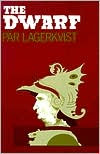
The Dwarf


Par Lagerkvist, translated by Alexandra Dick
****
The dwarf is the embodiment of human aggression. This is not hard to fathom: he cuts off the heads of little kittens, despises the weak and innocent, is proud to have strangled another dwarf, Jehoshaphat, making him the last dwarf at the court, and eventually poisons the Prince's best friend. Written in the form of diary entries, the story is entirely from the dwarf's point of view. He is thoroughly an unreliable and limited narrator: he can't understand the Princess Angelica's love for the son of the Prince's bitterest enemy, her mothers love for the Prince's best friend (not to mention why the Prince "puts up with" such a thorough rake), nor the court's Renaissance man's interest in learning and art for their intrinsic interest. He values war, revenge, and power intrinsically.

This would seem almost flat-footed (and sometimes is) except that the limited perspective forces the reader to consider how aggression affects relationships, identity, values, and meaning. Most of the time the dwarf embodies the Prince's aggression, but there are times when he acts upon the Queen and Angelica -- encouraging the Queen's self loathing and abasement upon the murder of her lover, and Angelica's suicide upon the murder of her lover. As the embodiment of the Prince's aggression, he is almost completely destructive to his best interests, destroying his friendships, love relationships to his wife and daughter, and his country. Eventually he is sent to the dungeon (repressed) where, in the last sentence of the book, he reflects "on the day when they will come and loosen my chains, because [the Prince] has sent for me again." So the dwarf will live on and be active again.

So what positive bit can we take away from this book? Maybe to be alert and aware to how our own aggression affects us? That some other course between total repression and total inhibition has to be found, what ever that might be? It seems to me it was no accident that The Dwarf was written during World War II.

11 May 2008

Himalayan Quest: Ed Viesturs on the 8,000-Meter Giants


Ed Viesturs
**** 1/2
This is really a picture book with a few introductory pages and extended captions. I saw it at 3rd Place Books for not much money and picked it up along with True Summit. Having read Viesturs's No Short-cut to the Top just a a few days ago, I couldn't resist. The pictures fill out his text nicely and many of them are very good. Every caption is matter of fact. The pictures -- with rare occasions -- are undramatic in terms of human struggle. Viesturs is afflicted with being so good, he rarely gets into trouble. The most dramatic scenes in his accounts involve saving other climbers or coming upon their bodies. I like this book even if it isn't dramatic. I like pictures of high places.

True Summit: What Really Happened on the Legendary Ascent of Annapurna


David Roberts
*****
Annapurna by Maurice Herzog has had more impact on modern climbing than any other book -- by any measure. It is still in print after 57 years and has sold more than 11 million copies. I've had a copy for about 30 years, a little paper back that sits meekly on the shelf surrounded by more imposing volumes. It is truly one of the most gripping climbing books ever and read like a novel. Roberts himself was deeply influenced by Herzog's book and it must have been with a little pain that he de-constructed the story and filled it out with the accounts of Louis Lachenal (who summitted with Herzog) and Gaston Rebuffet (who did not, but played an important role in finding the route up the mountain).

In short, Herzog, suppressed other versions than his of the climb for almost 50 years. Starting from before the climbers left France, to even 1998. The climbers who went with Herzog had to literally swear solemnly that they would follow his orders and not publish anything about the climb for at least five years after they got back. Five years later Lachenal was just about to publish his version when he was killed in a climbing accident. After his funeral, Herzog was given the responsibility of preparing the manuscript for publication, handing over editing duties to his brother and the head of the French climbing institution that sponsored the Annapurna climb and assigned Herzog as leader. Both men expurgated any negative comments about Herzog -- of which there were more than a few, as well as mention of any "negative" that may have occurred on the climb.

I won't go into all the details, but here is the best example of Herzog's modus operendi, and the Chamonix guides's response to one instance of his show boating. When they reached the summit, Lachenal wanted to return quickly since he felt his feet freezing (He lost all his toes by the end of the climb). Herzog, however, wanted to take pictures of three pennants on the summit: the French tricolor, the French alpine club's flag, and finally the flag of the tire company for which he worked! This offended Lachenal who gave the roll of film containing the flag shot to Rebuffet. Rebuffet developed the film and returned all the images to the official expedition photographer -- except for the picture of the tire company's pennant. Herzog knew that Rebuffet had the roll and even had the expedition photographer search him before boarding a plane to France after the expedition. Because of Herzog's political connections and power within French alpinism, Rebuffet never again climbed in the Himalayas. So what was depicted in Herzog's account as a noble, transcendent expedition was really just another climb.
Roberts did an excellent job of staying true to the real accomplishment of the Annapurna climbers while unraveling the suppressed events. As usual he captures the real feel of an expedition as good as any other writer, even Herzog.

05 May 2008

No Shortcuts to the Top: Climbing the World's 14 Highest Peaks


Ed Viesturs
*** 1/2
David Roberts did a very good job of preserving Ed Viesturs's voice in helping with this book. Roberts is one of the finest climbing/adventure writers of his generation, which is saying quite a bit given the fine writing that has come out in the last 40 years. Ed Viesturs is clearly one of the finest climbers of the last 40 years as well. Together, though, the book doesn't quite live up to the best of climbing writing. One of the great paradoxes of modern, professional climbing is that the climber has to get sponsorship in order to cover the costs of climbing the high peaks of the Himalayas. To do that they have to tell the world what they did either alone or with very small company. In short they have to brag without doing so in an unseemly manner.

Viesturs has had to hustle for upwards of thirty years now to sell his story and gain sponsors. This is a fact of life, and given Viesturs's gifts as a climber -- and his ambitions, I don't begrudge him having to do so. It just doesn't make for as interesting a story. Too much of the book is about the need to gain sponsors, give slide shows, and sell equipment. It's just the way it is. The truly high peaks demand too many resources and always have. Now, however, small teams approach these mountains alpine style, and individuals buy into "expeditions" instead of being recruited by clubs and national sport institutions. So the money comes from different sources, the politics change, and the stories have somehow become less compelling, unless, of course, there is disaster.

Poor Ed. He was good a climber. He' never lost any fingers or toes, had no bivouacs above 28 thousand feet, and usually climbed as planned. He felt in control
almost always on a mountain. Not as much drama in the telling when the voice is matter of fact. Was he as in as much control as he felt? I don't think so, but he probably was in control more than just about any other climber. His account of his three attempts to climb Annapurna are the best parts of the book because he was frightened by its routes. Ultimately overcoming fear is much more interesting than climbing high in itself.

02 May 2008

The Echo Maker


Richard Powers
****
Powers chose a really interesting topic: given what we are finding out about the brain and neuro-science, i.e. that the brain is more like a collection of processors and that our sense of self is a composite sitting on top of those processors, that our "common sense" about our identity is all wrong. The story starts just after an accident next to the River Platte where a yearly gathering of Sandhill cranes provides the back drop and perhaps the chief metaphor of the book: the self is like a flock of birds, it seems to have a mind of its own, but in fact doesn't, and instead is a collection of individual actors instinctively working together to form an emergent whole. The cranes are the echo makers with their load calls, exuberant dances and deep instinctual behaviors. There are three main protagonists in this story with a fourth who is a sort of mystery "key" to unravelling the mystery of why the accident the book starts with occurred at all.
The victim is Mark Schluter -- mid twenties, one year college, works repairing machinery in a meat packing plant, blue collar. His sister Karen comes to care for him after the accident. As he recovers it turns out he has Crapgras syndrome: recognizes her as a fake or copy of his sister, not the real thing. This drives HER nuts, so she writes to a famous neuro-psychologist for help, a guy named Weber. he comes because he's always wanted to meet a Crapgras patient. Meanwhile this uncanny nurse's aide who has helped mark has a saintly influence on all she meets. The evolution of Mark's mental state is interesting and well done. I had the feeling that the psychologist (known as "Shrinky" by Mark) is a device for revealing all the sub-systems lurking in the brain. His sections are not as compelling as those of the brother and sister.
So this was a good book, rather long, but reasonably satisfying.

Fiasco: The American Military Adventure in Iraq


Thomas E. Ricks
*****
Fiasco is well named. Ricks documents a firestorm of leadership ineptitude. Civilian, military, foreign service, press -- no one escapes blame for the lousy state of events in Iraq. Since Ricks is a Washington Post
corespondent, he focussed most of his attention on the military. However, it is clear from his account that Rumsfeld, Wolfurwitz, and Bremer -- particularly the last two -- take most fo the blame. Strangely, after giving Cheney "credit" for starting the war cries, the Vice President plays a lesser role in this account. Essentially, the President did not question Rumsfeld enough, did not rein in Bremer, and like Rumsfeld, ignored bad news. The civilian leadership's inability to accept and act upon bad news, to recognize the kind of war Iraq had devolved into, coupled with the military leaderships inability to develop an effective and appropriate strategy, doomed the war from its earliest weeks. Or perhaps, since General Franks didn't want to cross his boss, and his boss couldn't recognize Franks's lack of strategic thinking, one could say the war was doomed from that point. Or, even more likely, the war was doomed from the beginning since we went in with bad intelligence and few allies. A good but depressing read. Long, too.

13 April 2008

Inventing America: Jefferson's Declaration of Independence


Garry Wills
***1/2
I almost put this book down a number of times. The prose was unnecessarily turgid, the arguments and examples repetitive, and a number of points were overly developed while being picayune. But I plowed on, finally seeing how the argument came together along about chapter 23. In fact, for those picking this volume up, it might be better to start around 21 or 22, reading carefully through 23 -- then go back and skim the rest, reading some chapters more carefully.

Wills's main point is that, contrary to current opinion (current as of 1978), Jefferson's language was actually very precisely chosen, representing a moral and sentimental point of view that had a rich, contemporary context that lends exact meaning to phrases and words like "pursuit," "happiness," "bands which have been connected," and "inallienable rights." These phrases all point back to the Scottish moral philosopher Francis Hutcheson, not John Locke. This is a huge claim about the difference in meaning between an individualistic and communalistic reading of the Declaration. It is almost certainly the case that Wills felt he had to hammer his points home re Hutcheson as the origin of Jefferson's ideas since it was -- and maybe still is -- against the grain of majority opinion on Jefferson's philosophical underpinnings. So it was a good, but hard book to read.

23 March 2008

The Country Bunny and the Little Gold Shoes


The Country Bunny and the Little Gold Shoes
DuBose Heyward, pictures by Marjorie Flack
*****
Set in a country populated by rabbits, the main character is herself a rabbit with 21 children. It would seem her future is restricted by her responsibilities as a parent. However, this is an unusual bunny. She is wise, patient, brave, and -- a very fast runner.

When one of five Easter bunnies becomes too old to run fast, a wise, grandfatherly bunny holds on open competition to choose a replacement. So Mama Bunny takes her clutch of children to see the competition. As you may guess she is an unexpected contestant and winner.

The climax of the story comes on Easter Sunday, as you would expect. Not to give the story a way, she overcomes several challenges and proves her bravery. Our daughters Caitlin and Hallie have read this story every Easter Eve since -- well. A long, long time ago.

This year Caitlin is spending Easter in Sweden. So we made a short video of this year's Easter at home.


Here is another short video of Easter

17 March 2008

The Disappeared: A Retreival Artist Novel


Kristine Kathryn Rusch
****
Well, I've come to the last of the Retrieval Artist novels, though it is actually the first after the original novella -- which is out of print. Now I have to wait for the next one to come out. That will probably be a while, so I'm feeling a little disappointed there isn't another one I can pick up and zip through. All of them have been well plotted with believable, interesting characters. I think even my daughters would like reading these books They certainly are as well written as many of the novels they read from the young adult section of the library.

Miles Flint has been promoted to detective to become partner to an experienced, but politically maladroit, detective named Noelle DeRichi's. DeRichi has a role in almost every subsequent book in the series, playing a big part in how those stories unfold. However, by the end of the novel Flint will have become a Retrieval Artist, employing the services of a retrieval artist who will become his mentor. As in all the other stories, Flint is a force for small justices in an unjust legal system that has been warped by the desire to have major trade relationships with foreign species. In this novel the affects of those agreements and relationships on normal human beings is laid out very well by Rusch. The alien species are the Disty, the Wyngrins, and the Revs, huge monstrous beings with six arms and a high regard for truth. The Disty have gotten their vengeance and the Wyngrins and Revs are after the children of "criminals" who have inadvertently made huge cross-cultural faux pas. Kidnapping, double crossing, and murder are all legal in this extremely multicultural future. The trick is preserving justice without getting caught. That's the central challenge for DeRichi and Flint.

10 March 2008

Thermopylae: The Battle That Changed the World


Paul Cartledge
****
Historians, like the Greek city-states in their day, don't really know how to take the Spartans. They were admirable in their war making (a feared opponent), yet repugnant in their social practices: enslaving whole populations as war chattel -- for centuries, separating children from their families to be raised by the state for the state's needs, inculcating a warrior ethic that shamed the survivors of battles into suicide. In fact Thermopylae was a battle in which 300 Spartans, led by King Leonidas, were expected to not come back, and the one survivor who did was spurned by his society. He was miserable, and one year later in the battle of Plataea he left the Spartan line in a berserk-like, suicidal charge to make amends for having survived Thermopylae. (To no avail, it was bad form to break the line.)

So the main problem is that one of the most repressive, totalitarian societies ever known in Western history fought for the freedom of the Greeks against Xerxes and the Persian empire. Not only that, their stand at Thermopylae undoubtedly bought enough time for the Athenians to resist Xerxes fleet at Salamis, forcing his retreat. We can admire and be grateful for that, since the great flowering of Greek culture occurred after the Persian War.

This is a well told history of Thermopylae: background, context, immediate outcome, long term significance to the history of the world, etc. Perhaps the best chapter is the epilogue in which Cartledge recounts how historians and philosophers have viewed the Spartans over time. Totalitarian regimes (i.e. Nazi Germany) admired the Spartans, but so did Plato and Rousseau. At their best the Spartans were willing to die for the idea of freedom, even if the individuals didn't really have a choice.

Education For Thinking


Deanna Kuhn
***
This book struck a chord with me since it puts the emphasis on thinking and teaching thinking, a task that -- mostly -- can only be done by getting students to think. By "thinking" Kuhn means inquiry and argument. In the case of argument she is not advocating canned topics the teacher chooses which the students debate by talking to the teacher and not to each other. Instead she is advocating debates that start out as almost conversations between students which then become formal over time. She also includes an interesting and practical example of how to get Middle School kids to engage in meaningful and respectful argument on the topic of capital punishment. In other words by engaging in arguments, with just a little guidance on what makes some opinions better than others (facts, reasons, explanations of how facts and reasons support particular opinions), kids start thinking and valuing the thinking that authentic argument engenders. This is "learning by doing" pure and simple.

Inquiry is a little more difficult, in Kuhn's opinion, because it requires a student to step back into some meta-cognition regarding the act of inquiring. By implication inquiry is an iterative process, which as students become more adept, leads to more subtle and refined questioning and inquiry. Kuhn gives an example of inquiry by a grade school girl given the task to make a number of generalizations about sail boats. She also had students working in Middle School on an inquiry into marketing music using various booklet covers for CDs. In each case it took a fair number of weeks to finish the inquiry.

In both cases Kuhn felt she needed to find topics in which the students were interested (music), or about which they had strong gut feelings (capital punishment). Strong interest and feelings tend to free people (not just students) to think and communicate clearly. Students, particularly, are often in a position where they have little knowledge and minimal understanding with a new topic. It is almost impossible to speak authoritatively in that situation. Many students have the response of sticking to the facts or generalizing like crazy. If we want them to develop argumentation, then we need to start with subjects about which they can speak authoritatively, i.e. they can be authors. My hunch is that it's similarly the case with inquiry. Inquiry has to be learned by doing also, but maybe not all students should be studying the same topic.

Interestingly enough, Kuhn did not seem to tie argumentation and inquiry activities together, though they seem natural bedfellows. That being said, I was a little disappointed in the conclusion, being more of a call to policy action, rather than an appeal to teachers directly, the people who really make a difference in a child's education.